

Ellen Worrell (nee Monahan) is a longtime member of the Langley Heritage Society who moved to Milner in 1950 after marrying her husband Jack. She grew up in nearby Murrayville, where her father made deliveries for Porters Store. Ellen collects all things Milner, and has filled binders with photos, newspaper clippings and specific details about people, buildings, and community events. We’re using that information to create a Milner Timeline.
This rural community begin to take shape with the sale of the Hudson’s Bay Company farmlands in 1877 (in production since the 1830s). For a while, Milner was the centre of activity in the Langley region, boasting a general store, blacksmith shop, two churches, community hall, livery stables, B.C. Electric Station, B.C. Telephone exchange, cheese factories and numerous farms. Commercial agriculture in the Lower Mainland began here. Pioneer John Smith told the British Columbian Newspaper in 1910, “You can plough a fifty acre field anywhere here through rich, black loam and never find a rock.” Today remnants of that era can be found, and a strong sense of community remains — celebrated at the annual Milner Picnic in July. Thank you to the Langley Centennial Museum for sharing images from its photo archive.
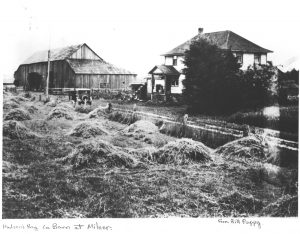
1877: The Hudson’s Bay Company sells its farm in 100 acre lots, from Jardine to the edge of today’s Langley City for approximately $25 per acre. The area is called Langley Prairie.
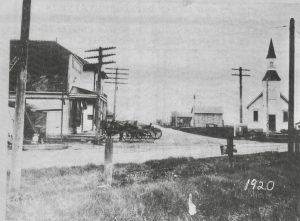
1885 – 86: Methodist church is built. When Henry Davis wanted to marry, the parents of his bride-to-be in Ontario insisted there be a church in the village. James Johnstone donated land; Henry Davis and Rev. Wood collected money for construction travelling on horseback from Mount Lehman to Mud Bay. The church was built for $919.50 by Thomas Turnbull. (The congregation joined the United Church in 1925.)
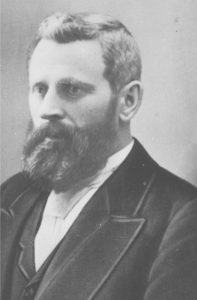
Henry Davis
1889: St Alban’s Anglican Church is built, opens in 1890 (dismantled and moved to Otter in 1926).
1891: More people move into the community with various occupations — carpenters, blacksmiths, butchers, fishermen, loggers, teachers, farmers (dairy, poultry & orchards) and beekeepers.
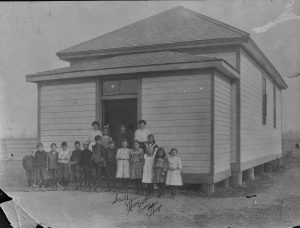
1900: The Prairie School located south of the Nicomekl River on 216th Street is moved and eventually located beside the blacksmith shop. The one room school has no electricity or water, with a wood stove in the middle of the room. Each morning water is supplied by the blacksmith shop in a bucket with a tin cup.
1908: H.A McDonald & Co opens the first grocery store, managed by Roy Carncross. The post office moves to the store from Frank Marrington’s home, the first postmaster. He hauled the mail daily from the boats 3 miles (5 kms) away at Fort Langley.
1909: At the suggestion of local school teacher William John Mufford, this part of Langley Prairie is renamed Milner, in honour of Vincent Alfred Milner, a colonial administrator.
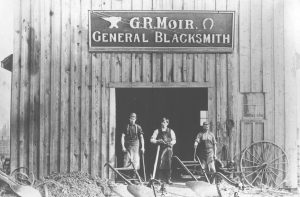
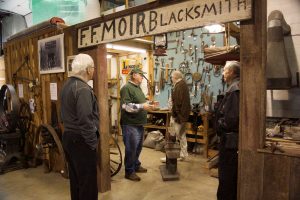
1909: George Moir opens Milner’s first blacksmith shop; after George died brother Frank would operate the shop. (Now found at the BC Farm Museum) More about Moir House, managed but the Langley Heritage Society HERE.


Group of telephone operators at the Milner Telephone Office, (left to right): unidentified, unidentified, Mary (Molly) Mufford (nee Hill), Isabel Sharp (nee Hill), unidentified, Annie Lynch (nee Worrell), Katie Norris.
The B.C. Telephone office opens; a rental residence is in the back until 1926 when B.C. Telephone moves to Langley Prairie. (Today’s Langley City)
1910: John Maxwell and Robert Burns Hutchinson subdivide their farms to begin developing the Milner townsite. Hutchinson advertises Milner as a place for “the brain-weary city man “ to have a, “quiet country home.”
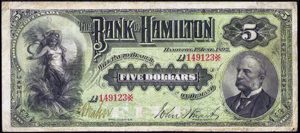
1910: The Bank of Hamilton opens and eventually merges with its rival, the Canadian Bank of Commerce. The building remains today as a private residence.
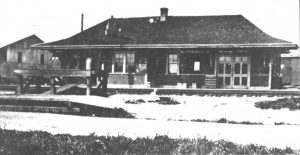
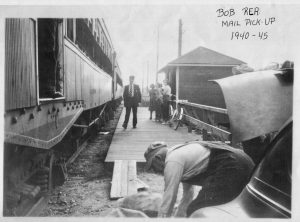
1910: B.C. Electric Railway’s Interurban arrives; a station and warehouse are built on land donated by Francis Worrell where today’s Otter Co-op Feed Mill stands. Station Agent Archie Fullton lives on site. People and freight now move from Chilliwack to New Westminster and beyond, to Vancouver. Milk from local dairy farms is shipped to the Fraser Valley Dairy in Burnaby. A favourite event is the annual church picnic — passenger cars are chartered for travel to Stanley Park for a fun day.
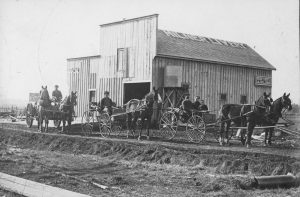
James Turner has a livery stable and feed store, later taken over by Dave Lattimer. With the coming of the automobile, Lattimer will operate the Esso Station. Watch a video about the Lattimer House, restored and managed by the Langley Heritage Society HERE.
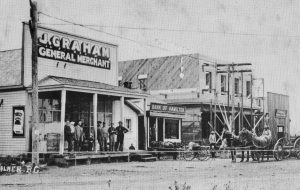
(Community Hall under construction to the right of the Bank of Hamilton building.)
1911: The Milner Hall opens for dances, roller skating and community events, built by Bill Maxwell and Roy Hallack for $4,000. The two storey structure features high quality hardwood floors on the second floor. It went broke during WW I.
1913: New Milner School on 3 acres of land purchased from J.H.Mufford for $1,100. It features two rooms with running water, toilets and a furnace in the basement. A third classroom was added in the 1920s and the fourth some years later. Miss Esty was the first principal. (Building is now the Hebron church.)
1915: The first May Day is held in Milner Park.
1918: Milner’s population is 500.
1919: The Royal Bank opens on the main floor of the Hall.
1920 – 1938: The Langley Fall Fair is held in the Milner Park.
1922: Langley High School moves to the back of the Milner Hall until the new school on Yale Road is completed in 1924.
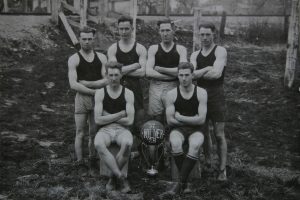
Milner Basketball team with the cup, 1927-28. Back row (L-R): Tom Mountain, Addie Towle, Frank Worrell. Front row (L-R): Tom Hunter and Roy Mountain.
1928: Milner’s basketball team wins Fraser Valley basketball championship.
If you have something to add to our Milner Timeline, please send to [email protected]
