

Above photo: Frank Leonard, 1924, from Vancouver Public Library collection.
Thanks to Trinity Western University student Sophia Kutney who shared her paper on the Fort Langley CNR Station. This has been edited for length.
In the heart of Fort Langley, the earliest agricultural centre in British Columbia and the first permanent European settlement in the Fraser Valley, lies a 107 year old train station that represents the visionary expansion of travel opportunities and the importation and exportation of freight around Canada and within Langley. While this train station underwent many transitions since 1915, being owned first by Canadian Northern Railway, and secondly Canadian Government Railway for a half year, and finally the Canadian National Railway in 1918, the train station remained a central place of opportunity for the Langley community.
The CNR Station was run by the Station Agent who lived on site with his family on the upper floor, constantly overseeing many moving parts to keep the station running smoothly. The Station is a shining example of “cultural contextualization” as its presence in Fort Langley shaped the community surrounding it, and is representative of the formative expansion of communities in the West as the railway system developed across Canada. HistoricPlaces.ca aptly describes how the station, “represents an important part of the transportation network that spawned and encouraged the growth of Langley…This particular corner became a transportation hub where all three elements of the network converged: railroad, river and road.”
In the midst of the railway expansion and the burgeoning community, the station was a space where many community needs were met through a variety of converging systems. Of these systems, the most significant were passenger service, accommodations, freight transportation, and creating a space for the community to gather and connect.
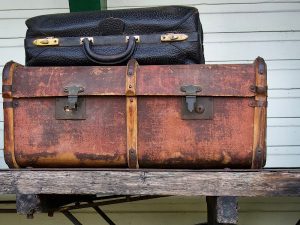 A primary system in this “community centre” was passenger service, overseen by Station Agent, Richard Simpson, which enabled travel, expansion, and even transportation of soldiers during both World War I and II. Passengers would gather at the train station and wait for their coming train. The Canadian National Railway was the first transcontinental railway to go directly through Fort Langley. Access across the country created opportunities for new immigrants to come to the West, which contributed to the growth of the once small agricultural community of Langley. The railway was vital as the primary artery of travel before air traffic and highway traffic emerged. Although passenger service was certainly crucial, the CNR Station was a place not only to buy tickets for the train and depart for travel, but where one could even have accommodations organized for them.
Within the station, posters advertised and promoted other services, encouraging people with slogans such as “Travel across Canada” and “Go to Banff and Jasper.” This became more lucrative especially after World War I when people had disposable income for travel and holidays.
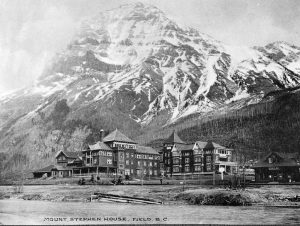
Image above taken from Baird, Craig, “The Grand Railway Hotels,” Canadian History Ehx, published September, 2021
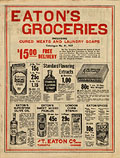
The railway station was crucial to the agricultural community of Langley as a vital link for the community to send out and receive freight for farming and everyday life. The railway brought goods to the community: Christmas presents, groceries, and more through the mail-order “Eaton’s Catalogue.” People would flock to the station to pick up their goods and mail from the Station Agent.
Langley Heritage Society’s CNR Station Manager Helen Williams says when people gathered at the station, much like people today, they would exchange the latest gossip. Farmers also had their goods sent out to be delivered. Williams describes how the drayman, who operated the horse and cart, would deliver items to the back of the train station from local farmers. The Station Agent made sure the goods got off the cart in the freight room, were transported into the station and onto the platform to await the train’s arrival.
As well, farmers came with milk, and the Station Agent would weigh the items and have them ready for the train. At times, the Station Agent would receive baby chicks and would alert the farmer to warm up their pullet barn in preparation. If the farmer could not get them in time, the agent had to care for the chicks himself, keeping them warm with the fire in his own house!
People gathered for community events at the Station; a stunning example is when British Royalty went across Canada via the railway. From HistoricPlaces.ca: “A whistle stop in Langley by the Royals in 1939 drew huge crowds. A grandstand was erected near the track, and a community band blasted a rousing welcome.” 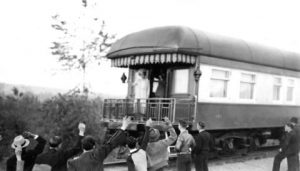
The CNR Station is now a heritage site that reflects its vitality in Langley’s history, as well as the railway’s impact on the history of the West. The station was the epicentre of many community-engaging systems including passenger service, accommodations, the transportation of freight to and from the community, as well as being an important space for the community to gather. Fort Langley’s CNR Station was a central hub of the community.
For more information and videos about the CNR Station visit HERE.
