McMillan Expedition Journal
It was 200 years ago in 1824 that a band of 41 men journeyed from the Columbia River to the Fraser River and back. They left Fort George (Astoria, Oregon) on November 18th in three canoe-shaped Columbia River boats, led by Scotsman and Hudson’s Bay Company employee, James McMillan.
Their mission: find a suitable location for a new HBC fort north of the Columbia on the Fraser River. They were running out of beaver; this was also following the Lewis & Clark Expedition (1804 – 1806) and Americans were settling in the region. It was getting crowded.
Most members of the expedition were French Voyageurs, but there were Iroquois, Kanakas, Englishman, American and Metis, including Francis Noel Annance, a clerk with the HBC, who kept a journal.
Three days into the journey he writes:
“Again a most fearful storm of thunder, rain and lightning! The ground groaned and wept…the trees shrieked with horror and bowed down with fear.”
They were travelling northward up the coast, sometimes dragging their boats along the shore, putting up a sail in quieter bays, paddling rivers or portaging. They overcame log jams and hacked brush & trees off of their portage routes and sometimes got lost in thick fog. Francis Annance was also a hunter in the party and wrote on December 1st:
“I went by land to the lake about 12 miles ahead in the hopes of finding animals. No elk. Rain! Rain! The evening we came to the prairie of the lake where we killed a deer, a goose and a salmon. Good supper.”
They stopped at Indigenous villages, and on the Puget Sound picked up guides and interpreters (likely Snohomish). As they continued northward they encountered more indigenous people — many fishing for salmon. Some fear them and flee. Others visit with the expedition. On December 9th:
“Made 30 miles today and then encamped with our Indians and many more come in the country from the lodges near us and passed the night with us. Fine Indians! They appear to be mild and well featured and good natured beings: they are very quiet and respectful. The country is beautiful.”
They reach Bellingham Bay and are forced to stop to wait out fierce winds. Their Indigenous guides know a route that cuts off the need to go around Point Roberts and they enter the Nikomekl at Mud Bay.
“We find the little river very winding and full of brush, logs etc. Towards the evening we come to the worst place; Dragging our boat through willows, shrubs, briars and beaver dams til we come to the portage and encamped”
This is very close to where the Langley Heriatge Society’s Michaud House stands today, directly beside Portage Park in Langley City. They made 2 miles the next day, the boats dragged and carried. Francis writes: “The portage is handsome prairies. The fish excellent.”
On Dec 16th they went down the Salmon River and emerged onto the Fraser River, right across from today’s McMillan Island. Sto:lo country.
They explored up the river, visited a village at the mouth of the Stave River to see looms in the lodges that make wool from dogs (likely the now extinct Salish Wool Dogs). They stop at other villages near the Harrison River and begin to trade beaver skins.
On December 19th. “Here we looked for a place most eligible for a Fort. Having found one, we marked HBC on the trees on the water side and pulled off.”
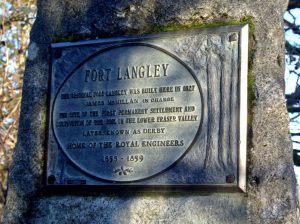
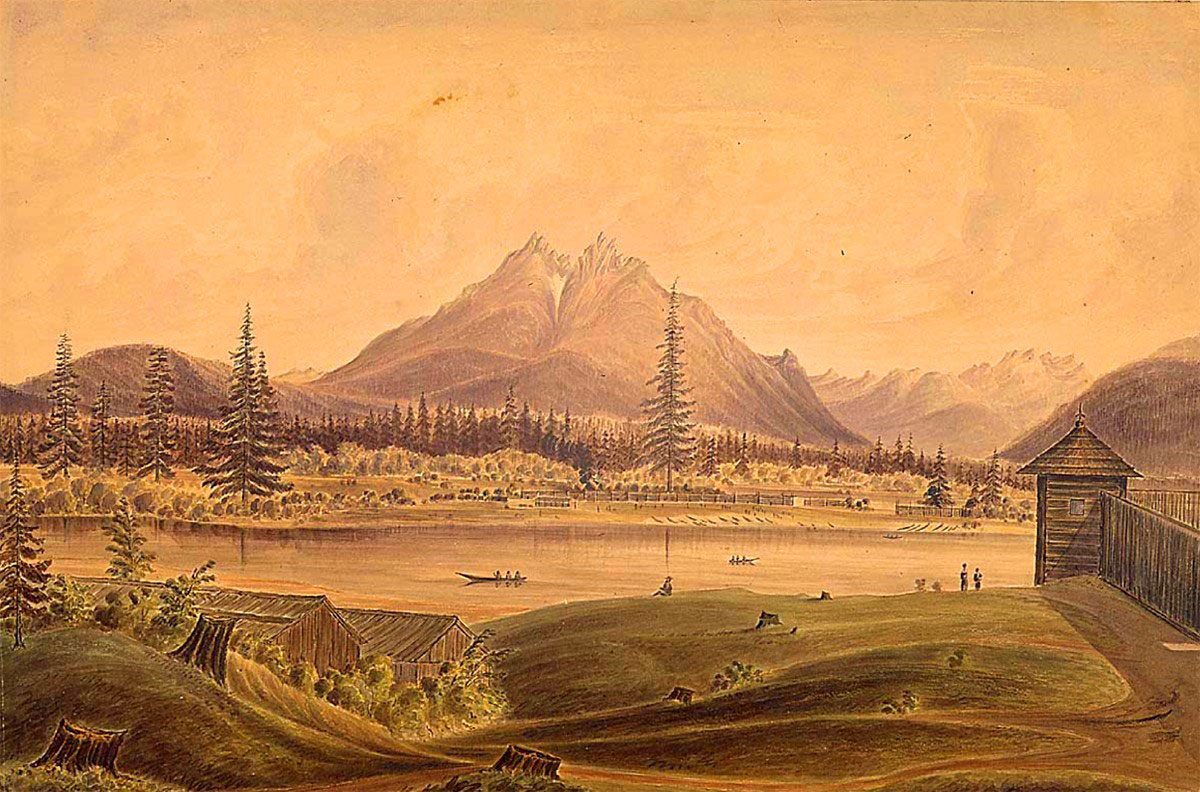
This is where the first Fort Langley would be built 3 years later at what we call Derby Reach. James McMillan would become the fort’s Chief Trader. His journal is
The expedition turned around and was back in Fort George on the Columbia River on December 31st. Francis concludes. “I may say in the language of Caesar — vini, vidi, vici: we came, we saw, and overcame everything.”
(This summary is based in part on the Annance journal located in the archives of the Hudson’s Bay Company by Dr Nile Thompson.)