Remembering Indigenous Veterans

George Hadden, Tommy Fillardeau, Bob Brown and James Hadden in uniform outside of the Edal Cafe. (Photo: Langley Centennial Museum) Although they had few rights, Indigenous men in Canada stepped forward in significant numbers to serve during the Great War, World War II and the Korean War.  Every eligible man between the age of 20 and 35 from Okanagan Head of the Lake Band enlisted. George McLean, a Douglas Lake cowboy, returned home a decorated hero after single-handedly killing 19 of the enemy and capturing 40 others.  Roy Cromarty (aka Sam Garner) was a Sto:lo man who lost his life in the fall of 1917.  Locally, Thomas “Tommy” Fillardeau, of mixed Métis/Kwantlen heritage, served during the Second World War. (His great-grandfather worked for the Hudson’s Bay Company at Fort Langley.) The Langley Centennial Museum’s digital archive includes the above photo, and a very brief biographical sketch of Tommy:   “Thomas “Tommy” Fillardeau [...]

2021-11-15T23:19:27+00:00November 15th, 2021|

Hudson’s Bay Company Cemetery

Above photo: Commemorative cairn and memorial garden at St George's Church in Fort Langley.  The Hudson's Bay Company Cemetery is located on the grounds of present day St George's Church in Fort Langley. (It's also included on our Fort Langley Walking Tour HERE). This was the Company's second cemetery, the first was established at Derby where the original fort was built in 1827. Only a few markers remain at the St George's site, but ground-penetrating radar indicates at least 24 burial sites, and possibly more. This is the final resting place of many from the fur trade era: Britons, French Canadians, Metis, Sto:lo, Iroquois and Kanaka peoples. Among them is Katrina, a high ranking Kwantlen wife of Peppeoh (Pion Pion), a Kanaka employee of HBC. The cross on the Anglican Church is in Katrina's memory, and is a Roman Catholic symbol of the Oblates. Read more in historian Warren Sommer's [...]

2021-07-15T04:18:06+00:00July 15th, 2021|

Sons’ Chicken Stories Fondly Remember Their Fathers

“Langley’s Agricultural Week: Little Dianne is not the least bit afraid of the big New Hampshire rooster one of 7000 birds on the poultry farm of her father E.A. Lightfoot , Langley who was host Thursday to a poultry field day.” Vancouver Sun, Friday, May 25, 1951 (Clipping from Ted Lightfoot’s family album) Ted Lightfoot and Ken Napier smile and can’t help but chuckle when remembering their fathers’ chicken businesses in Langley, and the real-life adventures of these two farmers to keep their flocks healthy and genetically strong. Ed Lightfoot had a garage in Vancouver. Between the long hours and lead gas fumes, he needed a healthier career. He took poultry courses at UBC and made his dream a reality in 1937 by buying land on 232 Street (Livingstone Road) at 72 Avenue. By 1939 Lightfoot Hatchery was established. Frank Napier opened Napier Hatchery and Poultry Farm in 1938 moving [...]

2021-04-10T00:13:54+00:00April 9th, 2021|

First World War Brides to Langley – They Came For Love

Maple Ridge's Annette Fulford has been researching the stories of Canadian First World War brides for many years. Her own grandmother crossed the Atlantic after the war with her new husband, a Canadian soldier. Annette has kindly shared some of her research and images about war brides with connections to Langley. She'd also like to hear from you if you have further information about these women who contributed so much to life in Canada.  Thousands of young women came to Canada after the First World War as war brides. Yet we rarely hear stories about these pioneering war brides. Many young women signed up with one of the newly formed organizations to support the war effort or worked in jobs that were traditionally held by men in Britain. They met Canadian soldiers who were sightseeing, at dances, visiting with their family or when the soldiers were recovering in hospital from wounds. By [...]

2020-11-04T19:16:19+00:00November 4th, 2020|

An Index of Langley Road & Place Names

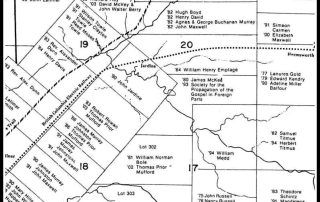
When Langley Township moved to a numbered road system of streets and avenues back in 1946,  family names connected with roads disappeared. In some cases, multiple family names were connected to one road. (200 Street was known by 5 different names along various stretches.) Some pioneer names survive at Langley schools like Topham and Douglas; creeks and rivers, including Bertrand and Nicomekl --  and parks like Alex Hope, Noel Booth and James Kennedy. The Township’s largest bus interchange is named after Jack Carvolth, killed in action at Vimy in 1917. Some original names are also preserved in heritage road markers. Thanks to Maureen Pepin’s efforts, these original names are found in her book, Roads & Other Place Names in Langley, B.C. (1998). It’s an excellent resource to discover who Langley’s roads, historic communities and waterways were named after and includes many profiles.   Avenues Running East & West   Boundary…………………....0 [...]

2024-11-22T04:48:41+00:00October 7th, 2020|

Fort Langley CNR Station: A Story in Photos

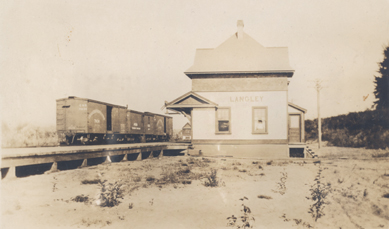
Photos have a wonderful power to capture specific moments in time. The digital collection at Langley Centennial Museum (now salishan Place by the River) is an excellent resource when hunting for images from Langley's past. We went searching for photos of the earliest days at Fort Langley's CNR Station, built by the Canadian Northern Railway in 1915 to a Class 3 standard. (The railway was later absorbed by the publicly owned Canadian National Railway after Canadian Northern went broke near the end of the Great War.) The photo below shows workers laying steel through Langley in 1911.   Below: More levelling work in Langley to prepare the rail grade. Below: The first Canadian Northern (CNoR) train arrives in Fort Langley.     Below: The station, as it looked in 1926. The gardens have begun to mature, tended by station agents Richard and Mary Simpson who lived at the station from [...]

2024-11-27T19:01:02+00:00October 2nd, 2020|

Hidden Railways of Langley

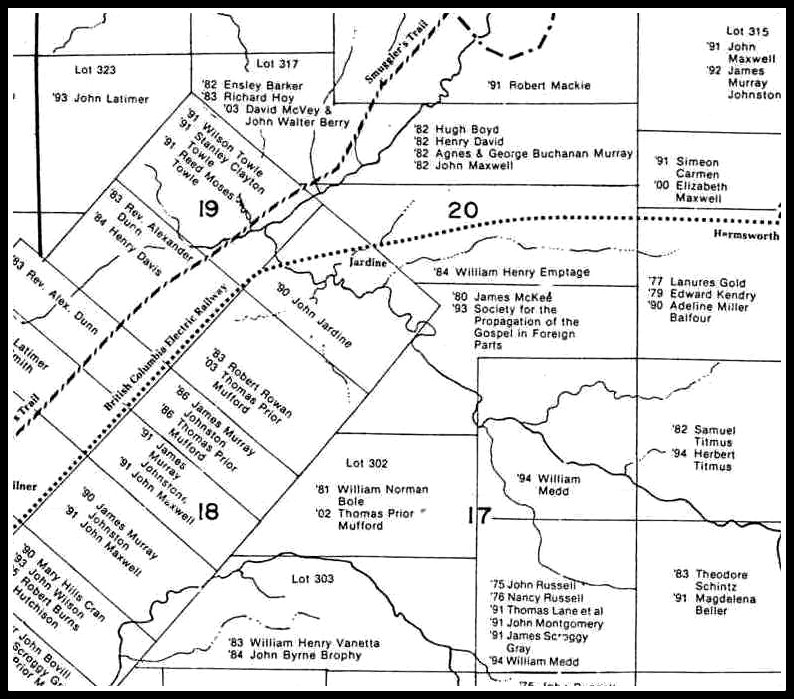
Great Northern Railway crew at Hall’s Prairie in Surrey (Langley Centennial Museum photo) We recently received an intriguing question from Joan who lives in Langley: "We live on 40 Ave and believe a train used to cross through or next to our property. We have some ancient pillars in the creek at the back that probably held up the trestles. Would you have any photos or information on this train? Thanks!"   Joan lives just south of the Five Corners near Murrayville. (We'll refrain from giving the exact street address.) The map below is from 1911 and covers much the same area, highlighting various railway lines in the Fraser Valley (City of Vancouver Archives) The red line in the upper left marks the BC Electric Railway on its way to Chilliwack.  Zoom out (below) and the black rail line is identified as the V.V. & E. Railway (Vancouver, Victoria and [...]

2020-10-14T21:04:53+00:00September 15th, 2020|

When the Spanish Flu Hit Langley 

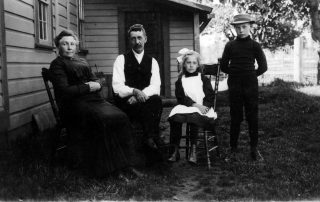
Maria, Herbert, Florence, and Harry Cassidy at home in Murrayville c. 1911. Langley Centennial Museum photo 0114 A century after the Spanish Flu swept across the world, Langley historian and author Warren Sommer recounts how the disease affected the people of Langley. Social distancing, self-isolation, and quarantine. Wash your hands and don’t touch your face. Each of these terms and instructions is now sadly familiar to all of us. The current Covid 19 pandemic has us worried about older friends and relatives, anxious about the economy, and wondering when we’ll be able to resume activities formerly taken for granted All of these concerns would have been easily recognized by Langley residents a century ago. In the spring of 1920 the global influenza pandemic, inaccurately known at the time as the Spanish Flu, had been underway for over two years. Its effects were devastating. Those who contracted the virus saw their skin [...]

2020-06-01T19:32:52+00:00June 1st, 2020|

Who is Glover Road Named After?

Sometimes we receive historically-related questions out of the blue, including  this one from Stephen Ng: “How did Glover Road get it’s name?” The answer is found in Roads and other Place Names in Langley by Maureen Pepin (and available at the Langley Centennial Museum).   Langley Trunk Road was renamed in honour of Lieut. Frank W. Glover, Langley’s Municipal Engineer who served with the Canadian Engineers during WW I. He died shortly after the war ended (like so many other veterans from that war). There were other members of the Glover family who served as well.   Frank Glover's name appears on the Fort Langley Cenotaph   The chestnut trees located beside the Fort Langley Cemetery were planted by Dr Benjamin Marr and fellow veteran Archie Payne to remember those lost during the Great War. Other street names like Allard, Wright and Bartlett honour those who gave their [...]

2020-05-27T05:59:35+00:00March 24th, 2020|

Valley Voices: People, Places and Stories of the Fraser Valley

Valley Voices is a production of the Langley Heritage Society on CIVL 101.7 FM (based at the University of the Fraser Valley). Former CBC Radio broadcaster Mark Forsythe interviews people connected with Fraser Valley history and heritage, and draws on the Oral Histories collection at the Langley Centennial Museum.  (If you have difficulty playing a sound file, try opening with Google Music Player. CIVL Radio sound files of the show are HERE.) The show has been on hiatus during the pandemic, but links to broadcasts from 2018 - 2020 are below. The British Columbia Historical Federation (BCHF) awarded Langley Heritage Society’s Mark Forsythe the 2019 Best News and Media Award. March 2020: Meet Chief Dan George's great-grandson, Sam George, an Aboriginal Support Worker in the Langley School District who connect youth with their heritage. And Robert Reyerse gives us a tour of the Harrison Sasquatch Museum. Listen HERE. February 2020: Valley [...]

2024-11-21T05:34:25+00:00March 4th, 2019|
Go to Top